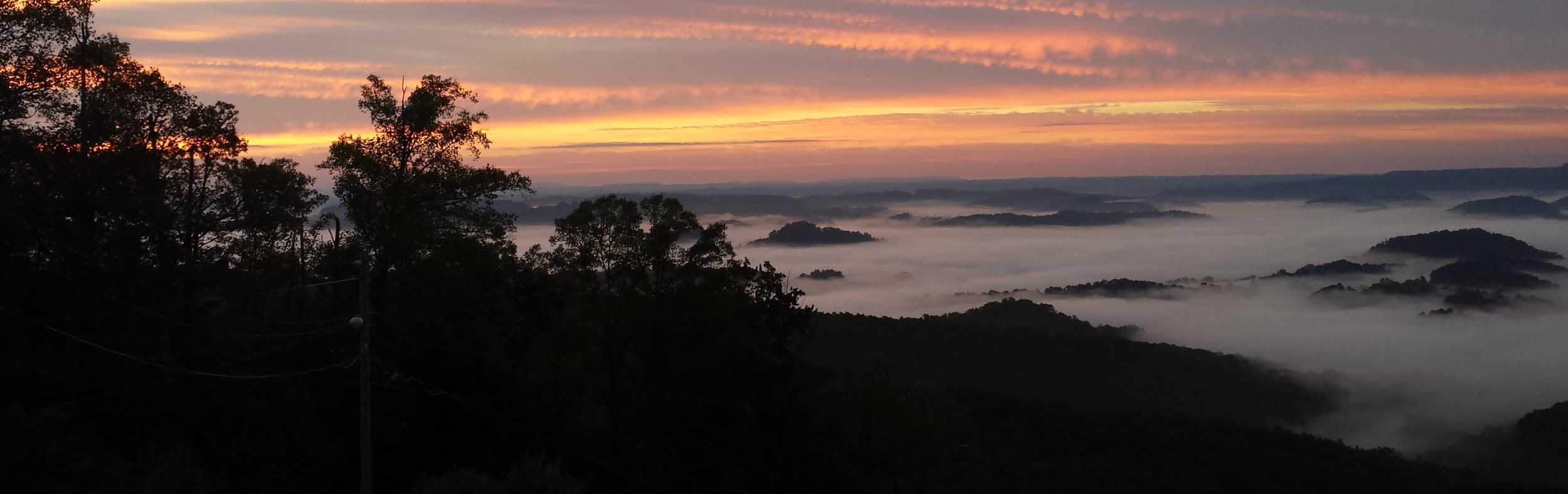
Ironstone 100K is a trail race across 100,000 iron stones. There are big rocks. There are small ones. Most are solid, however some are not firmly anchored in the ground with no warning as to which is which. Many, many of them are sharp and pointy (oh, so pointy!). There are invisible stones and ones that hide in the shadows of other rocks. There are smooth ones and rough ones, but more of the latter than the former. A very few are flat, yet most of these seem to have been removed from the course over the years. There are so many rocks and stones littered along the course that they ran out of ground and had to stack them on top of each other. Layer upon layer upon layer of rock for you to scramble over. Oh, and the majority of these are encountered overnight in the dark.
As a point-to-point course from Canoe Creek State Park to Greenwood Furnace State Park, those without crews need to take a shuttle from the finish to the starting line. They had two buses that left about 12:20pm and got us to the start with about 35 minutes to get our bibs, drop off our drop bags, and ice up for the race. I normally like to be at the start much earlier than this, but didn’t feel rushed.
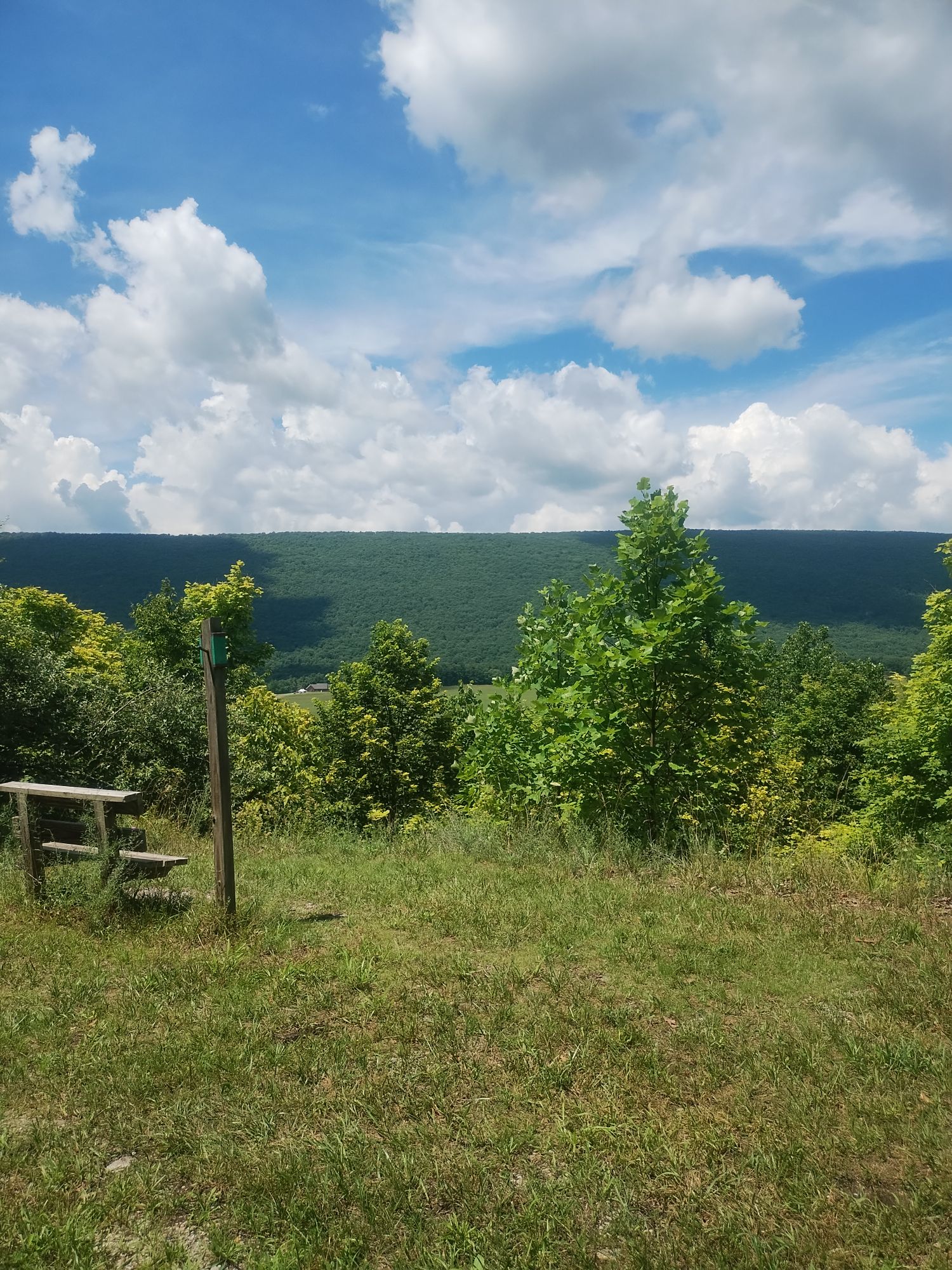
The first couple miles are through rolling trails around Canoe Creek with some decent hills tossed in to wake you up. I wanted to start out rather conservatively and quickly found myself towards the back of the pack.
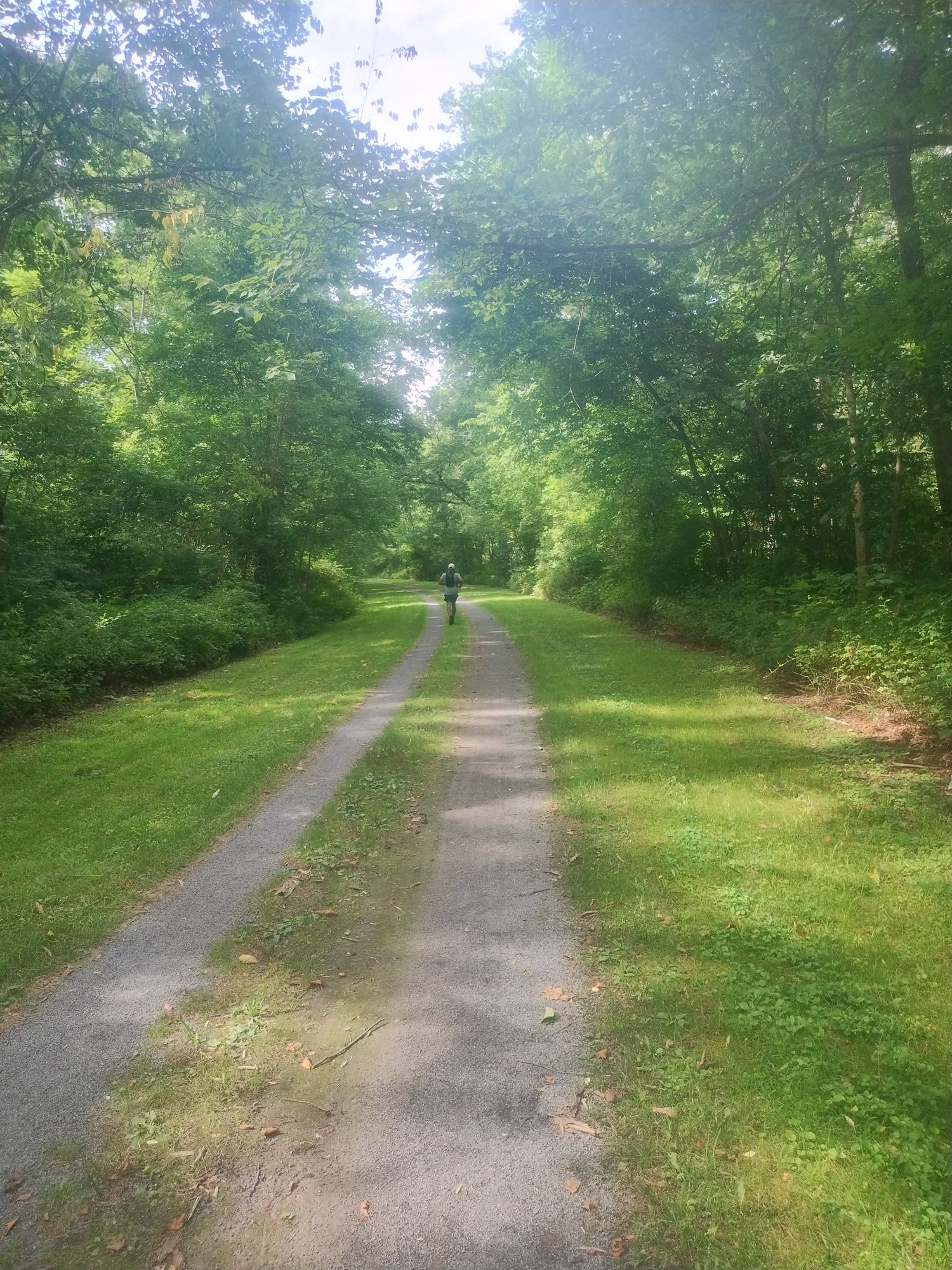
Once we hit the rail trail, my goal was to target an 11 minute pace. I’ve found that a strict run/walk ratio (i.e. 7min/3min) doesn’t work for me. I like to be a bit more fluid with when I run (downhills, shaded sections) and when I walk (uphills, sun exposed areas). If my pace is faster than my target, I’ll then walk until it gets up to where I want it. Picking the correct target is an art that I’ve been slowly perfecting for the past decade. The 11 minute pace was 20-25% slower than what I could do during an easy effort 20 miler. I was probably 5-6 miles into the rail trail before realizing this pace was a tad too spicy so backed it off to 11:15/mile, which felt a bit better. Again, art not science. Thankfully, the temperatures this year were rather mild and this section is mostly shaded which also helped keep me from overheating.
There’s a nice gentle climb once you leave the rail trail after AS4 on a gravel road. It’s the perfect transition to get your legs warmed up for what’s to come. I decided to dial back the effort here so ended up getting passed by a couple runners. I then got passed by a bunch more on the first big climb. I even had to stop several times heading up it for short 10-20 second rest breaks. Apparently, the past six months of training for and racing flat, road ultras didn’t adequately prepare me for sustained climbs. Huh. Who would have guessed? The other annoying thing is that I managed to break one of my trekking poles two miles into the 40 mile rocksageddon. When it rains. . .
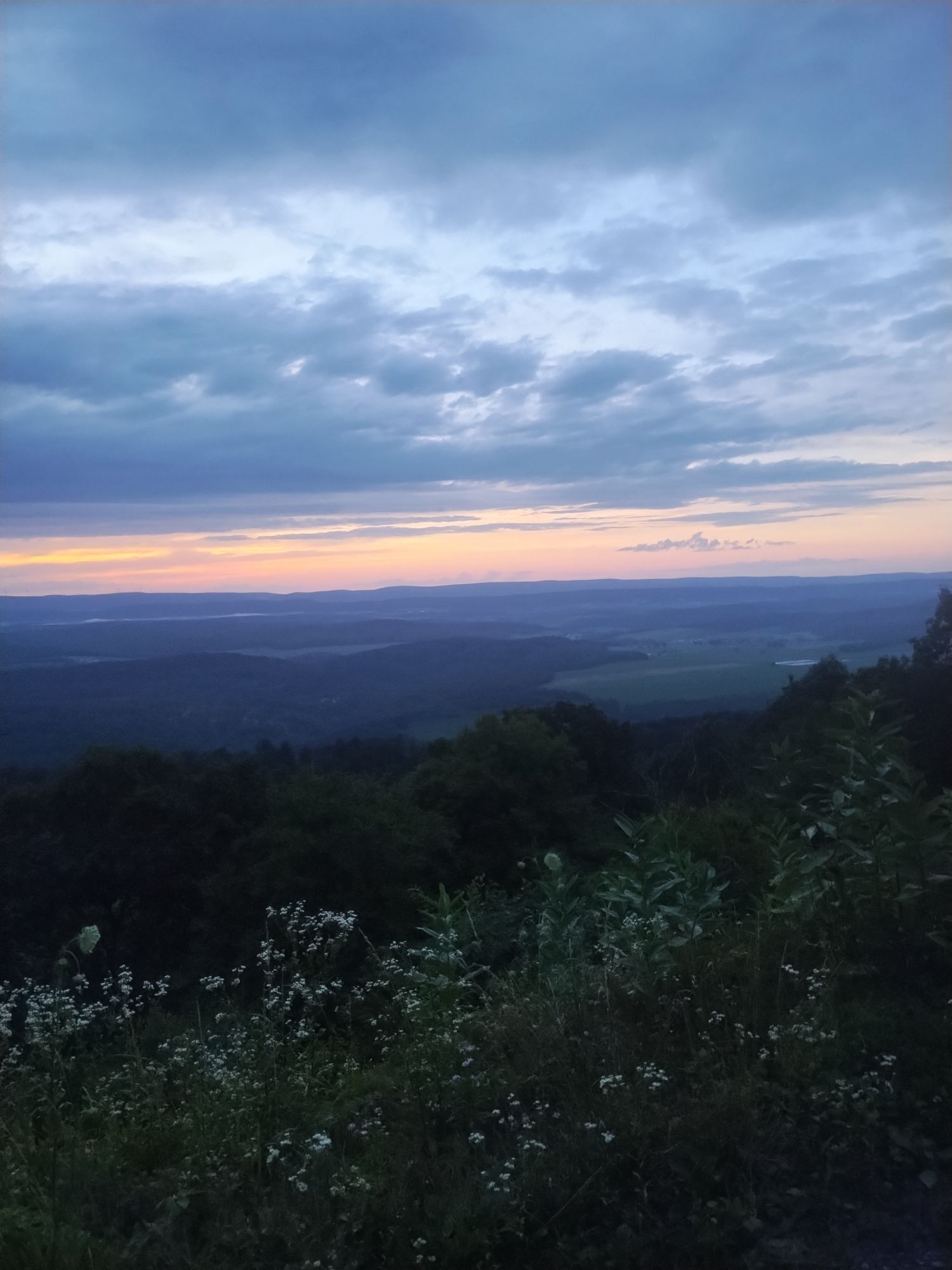
So I rolled into AS5 at dusk with one pole, low on nutrition, and likely partially dehydrated to boot. I normally treat aid stations like NASCAR pit stops, but decided to take at least 10 minutes to get myself sorted out. As I sat in a chair, a volunteer walked over with my broken trekking pole that I had immediately tossed in the trash. He said he thought he could fix it, however after a quick check it turns out a portion of the pole had broken off so it was about 6 inches shorter than the other. Oh, well. It was the thought that counts. And the volunteers at all of the aid stations were incredibly thoughtful and helpful throughout so it’s not like this was an isolated occurrence either.
Within minutes of leaving the aid station, I linked up with another runner, Matt, who was moving along at about the same pace. I latched onto the back of him and we ripped through the next section at a blistering 21-22 minute pace. Despite this we still managed to pass about 10 runners without getting passed ourselves. We ended up staying together until the last aid station and it definitely helped with navigation. Given the amount of rocks on the course (see above), it was easy to lose the trail. As I was trailing him by 10-15 feet, it was easy for me to spot the correct track when he paused ahead of me. All of the other runners we passed overnight were also using the Buddy System so I wasn’t the only one to latch onto a fellow runner. Since the race doesn’t allow pacers, this is my Pro Tip if you’re signed up to run this race in the future.
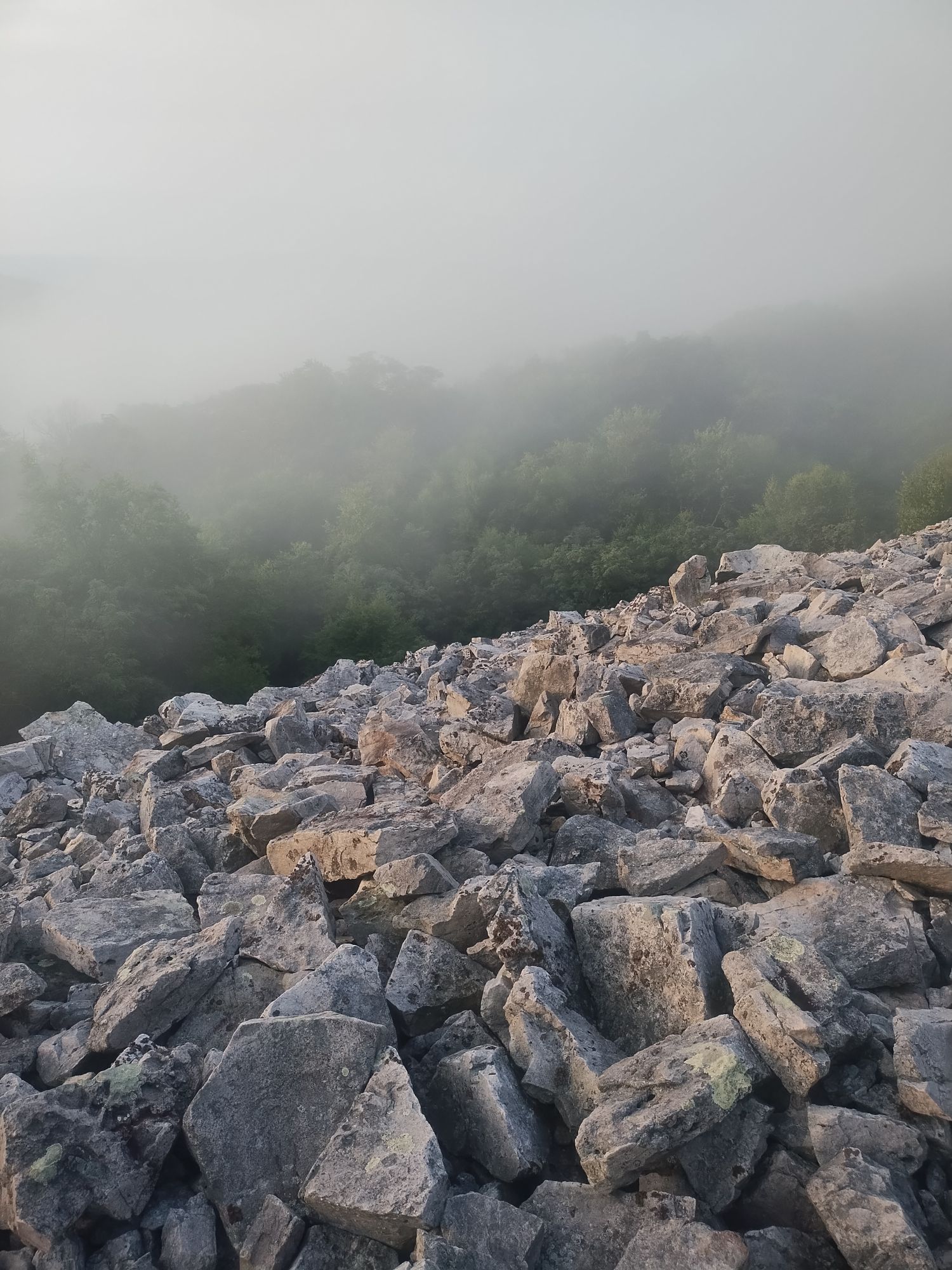
There are two more nasty climbs before you get to the end. The first one leaving Indian Steps AS might be the steepest climb I’ve ever done. Or maybe it’s just recency bias. Regardless, it sucked. Matt completely dropped me like a bad habit, but was cool enough to wait for me at the top. A couple minutes after finishing this climb I ate some gummy bears (my fave), however my stomach was having none of it and immediately rejected the calories. I’m thankful that I never have stomach issues in races and even though I had just hurled, I felt fine. I gave my stomach a mile or two to recover from the climb and then I was back in business.
The last climb leaving AS9 wasn’t as steep, but it was much longer. I was still having to take periodic rest breaks and got passed by a handful of runners, which is always a little discouraging. I passed a couple myself on the decent so probably wasn’t doing as poorly as I felt. And then it was a short trip through the parking lot to the finish line where Ben (RD) was on the mic announcing each runner along with something personal about them. It’s a nice touch and a great way to end the race.
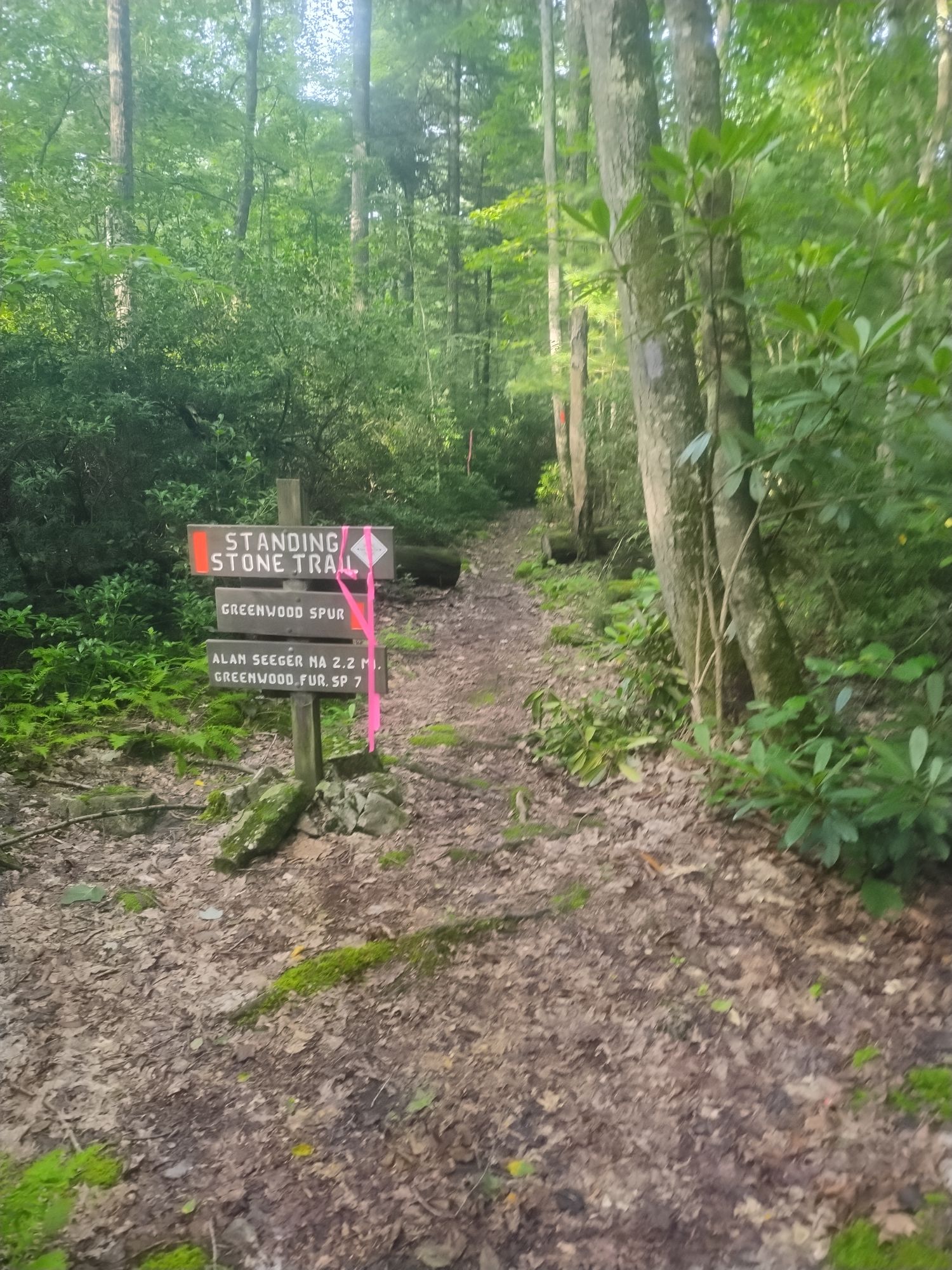
So I’m not gonna lie. Initially, I was mildly disappointed with my finish time. I thought I would be much closer to 18 hours than my 20:21. Then I happened to notice that I was the second oldest finisher at 54 years old with only 5 of the 77 finishers this year being 50+. The finish rate spiked to 73% from 61% last year and 50% the first couple years. While the temperatures helped, my guess is a bigger contributing factor is that runners just know how tough this course is now and only those truly prepared are showing up. The stories are out there. They’re being shared amongst those in the know. Let this race report be another validation that what you’ve heard is true and no tall tale. Frankly, you can’t make this stuff up.
Overall, this is an amazing race I wouldn’t hesitate to recommend it. Just make sure you practice your bouldering skills before toeing the start line.